
When a Sectional Sofa Is Better Than a Regular Sofa

Deciding between a sectional sofa and a traditional sofa comes down to how you actually use your living room. The right choice depends on your space, your household size, and whether you prefer lounging or formal sitting.
This guide breaks down the real-world scenarios where a sectional wins, and when a regular sofa still makes more sense.
-
You have a large family or household and need to maximize seating.
-
You love hosting game nights, movie marathons, or having frequent guests. Sectionals offer more seating, making it easier to accommodate everyone comfortably.
-
You want a flexible layout that can be rearranged or expanded as your needs change.
Quick Answer: When a Sectional Beats a Regular Sofa
A sectional sofa is better when you need maximum seating, lounging comfort, and room layout flexibility in one main seating piece. With more seating available, sectionals are ideal for hosting or accommodating more people, making them perfect for entertaining guests or larger households. If your household prioritizes sprawling over sitting upright and you have the floor space to accommodate it, a sectional typically outperforms a standalone three-seater.
Here are the top four situations where a sectional wins:
-
Large or open-plan living rooms (around 18’ x 14’ and up) where a regular sofa looks lost in the space
-
Households that host game nights, movie marathons, or frequent guests needing seating for 5+ people
-
Families who want one “everyone fits here” lounging zone for weekend cartoons or Sunday sports
-
Spaces where you need to visually divide zones, like living and dining areas, or lounge and work areas, in open concept spaces
That said, a sectional isn’t always the answer. For small spaces, narrow rooms under about 10 feet wide, or highly formal sitting rooms, a regular 3-seater with two accent chairs may still be better. We’ll cover those scenarios later.
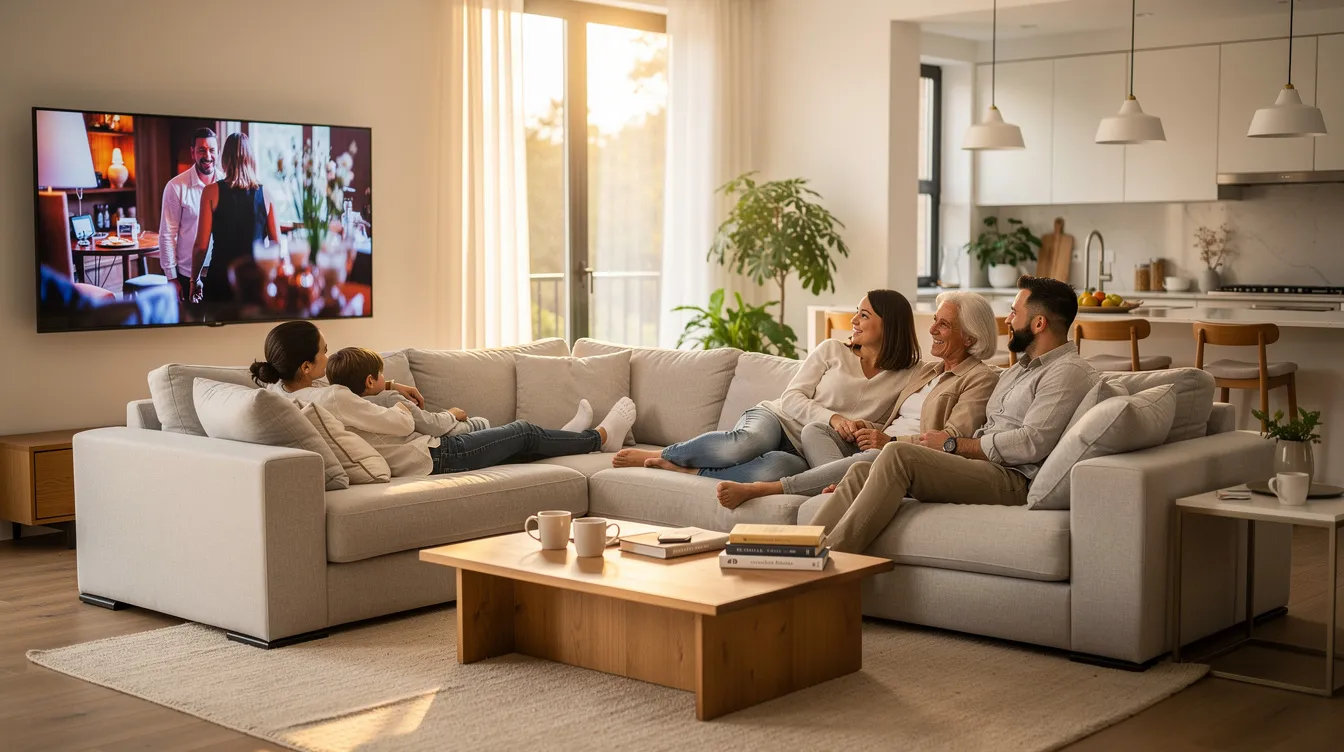
Introduction to Sectional Sofas
Sectional sofas have become a go-to choice for modern living rooms, thanks to their ability to create a comfortable and inviting seating area that adapts to your space and lifestyle. Unlike a standard sofa, a sectional sofa is made up of multiple pieces that can be arranged in various configurations, making it easy to fit both large spaces and more compact rooms. This modular design means you can customize your furniture to suit your needs, whether you want a cozy corner for reading, a spacious setup for entertaining, or a flexible arrangement that evolves with your family.
With so many styles, fabrics, and shapes available, sectional sofas can complement any décor, from sleek and modern to classic and traditional. They’re perfect for anchoring a living room, providing ample seating for guests, and making the most of your room’s layout. Whether you’re furnishing a new house or updating your current living space, a sectional sofa offers the versatility and comfort that most people are looking for in their main seating area.
Understanding Sectionals vs Regular Sofas
Before diving into specific scenarios, let’s clarify what we’re comparing.
A regular sofa is typically a 72”–90” three-seater that functions as a standalone piece. It seats 2-3 adults comfortably and works as a single, non-separable unit.
A sectional comprises multiple connected components that form L-shaped, U-shaped, or pit-style configurations. These can range from simple chaise sectional setups to elaborate modular sectional sofa systems.
Here’s how sectionals differ from traditional sectional sofas and regular couches:
-
Designed to anchor a larger seating area in one unified piece
-
Often include chaises, corner seats, or extended sides for stretching out
-
Can be fixed-layout or modular (modular pieces that move or add on)
-
Naturally, create a corner for lounging and TV viewing
-
Seat depths often range from 24” to 27” versus a regular sofa’s 20” to 22.”
And here’s where regular sofas maintain advantages:
-
Better for narrow rooms or when you need flexible traffic routes
-
Easier to pair with chairs and accent pieces for formal layouts
-
Simpler to move through tight stairwells and apartment doorways
The rest of this article focuses on realistic, everyday scenarios to help you decide when a sectional wins.

Types of Sectional Sofas
When choosing a sectional, it’s important to consider the different types available, each offering unique advantages for your living room setup:
-
U-shaped sectionals: Ideal for spacious living rooms, a U-shaped sectional wraps around three sides, creating a cozy and inclusive seating area. This style is perfect for movie nights, big game gatherings, or any time you want to seat a crowd comfortably.
-
L-shaped sectionals: An L-shaped sectional is a smart solution for smaller rooms or for making the most of a corner. It provides plenty of seating without overwhelming the space, and its shape naturally defines the seating area.
-
Modular sectional sofas: For ultimate flexibility, modular sectionals are made up of movable pieces that can be rearranged as your needs change. Whether you want to create a pit-style lounge for game nights or split the pieces into separate sofas for a new room layout, modular sectionals adapt to your life.
-
Reclining sectionals: If comfort is your top priority, a reclining sectional lets you kick back and relax at the touch of a button. These are great for home theaters or anyone who loves to unwind in style.
-
Chaise sectionals: Combining a sofa with a chaise lounge, this style offers a comfy spot to stretch out without taking up as much space as a full U-shaped or L-shaped sectional. It’s a popular choice for smaller living rooms or apartments.
-
Traditional sectional sofas: For those who prefer a timeless look, traditional sectional sofas offer classic lines and elegant details that never go out of style. They bring a sense of sophistication and coziness to any room.
No matter your style or space, there’s a sectional that can make your living room feel more inviting, functional, and tailored to your needs.
When a Sectional Is Better for Your Room Size and Layout
Room dimensions and traffic paths are the first deciding factors. A sectional that dominates a small room creates frustration, while one properly scaled to a spacious living room anchors the space beautifully.
Sectionals shine in these specific room scenarios:
-
Open-plan living room–kitchen combos where you need to define a TV or conversation zone
-
Large rectangular rooms around 18’ x 12’ or wider, where a regular sofa feels “lost.”
-
Corner-heavy rooms where two walls form a natural nook for an L-shaped sectional
-
Living spaces with high ceilings (9’ and up) that need visual grounding
Here’s concrete layout advice for sectional placement:
-
Leave 30”–36” walking space between the sectional and walls or other furniture
-
Typical L-shaped sectional lengths: 100”–120” on the long side and 65”–90” on the shorter side
-
For a U-shaped sectional, plan for rooms at least 14’ wide so the piece doesn’t feel cramped
-
In rooms narrower than about 10’–11’, a traditional sofa with extra chairs may be easier to live with
Sectionals as Space Dividers in Open-Concept Homes
Newer homes and condos built from the mid-2010s onward often have few interior walls. In these layouts, your furniture does the zoning work that walls used to do.
An L-shaped or u shaped sectional acts as a “soft wall” in several ways:
-
The back of the sectional can face the dining area to define a dedicated lounge zone
-
A chaise or extended arm can mark the edge of a walkway between the kitchen and the living room
-
Works well in lofts and studio apartments to separate “living area” from “sleeping” or “work” zones
A regular sofa usually needs extra pieces, such as console tables, screens, and area rugs, to achieve the same zoning effect. A sectional accomplishes this as a single, unified element.

When a Sectional Is Better for Seating Capacity and Comfort
Seating capacity is often the main real-world reason people choose a sectional over a traditional sofa. Sectionals provide more seating for families and guests compared to regular sofas, making them ideal for entertaining or accommodating larger groups. The numbers tell the story clearly.
Here are specific comparisons:
-
A standard 84” regular sofa seats 3 adults; typical L-shaped sectionals comfortably seat 4–6
-
A U-shaped configuration can seat 6–8, replacing the need for two sofas or a sofa plus love seat plus extra chairs
-
Deep-seat sectionals (24”–27” seat depth) create a “movie pit” effect that a regular sofa rarely matches
-
In a 15’ x 15’ room, a U-shaped sectional can replace a 3-seater + loveseat + two chairs combo
These household situations favor sectionals:
-
Families with 2+ kids who pile up for Friday movie nights or weekend cartoons
-
Homes that host Sunday big game gatherings where 5–7 people need a view of the same TV
-
Houses where people like to sprawl, nap, or work from the sofa with laptops
-
Households wanting a comfortable place to relax without multiple separate seating pieces
A chaise sectional offers built-in leg support, often eliminating the need for an ottoman or side table arrangement.
Better Lounging: Chaises, Corners, and Pit-Style Sectionals
Sectionals turn a living room into a “lounge zone” rather than a formal sitting room. This philosophical shift matters for how families actually use their space.
Here’s what makes sectionals superior for lounging:
-
Chaise sections are perfect for stretching out with a book or tablet without needing a reclining sectional or separate recliner
-
Corner seats create cozy nooks, a comfy spot ideal for reading or kids’ gaming
-
Pit-style setups made from modular pieces form a nearly square platform for full-family hangouts or overnight guest sleepovers
Imagine a 5-piece modular sectional arranged as a 9’ x 9’ square pit for New Year’s Eve movie marathons. Most people find this kind of full-body lounging impossible with a single 3-seater, which supports upright sitting more than reclining.
When a Sectional Offers More Flexibility Than a Regular Sofa
Modern sectionals, especially modular sofas, adapt better to life changes than a fixed sofa. This flexibility matters if you anticipate moves or family growth.
Here’s how flexibility breaks down:
-
Fixed sectionals arrive as connected units with no reconfiguration capacity
-
Modular sectional systems assemble from individual components, corners, armless seats, chaises, ottoman pieces, that can be rearranged
-
You can start with a smaller 3-piece L-shaped configuration and add modules later as family or room size grows
-
For renters, smaller movable pieces are easier to navigate up elevators and through hallways than a single large sectional frame
The reconfiguring advantage is significant:
-
Rebuild an L-shaped layout into two separate, smaller sofas for a new house without buying all-new seating
-
Turn a long sectional side into a standalone sofa for a separate media room
-
Adapt your configuration as how much space you have changes over time
Regular sofas are “set it and forget it” pieces. You can move them, but you can’t reshape them. A modular design offers ultimate flexibility.
Adapting to Hybrid Work and Multi-Use Living Rooms
By the mid-2020s, many living rooms will double as home offices and study zones. This multi-use reality affects furniture choices.
Here’s how sectionals fit this lifestyle:
-
Wide chaise ends provide space for laptop work with a side table nearby
-
A corner piece can form a semi-private nook when paired with a floor lamp and a small work table
-
Modular pieces can be separated to create a temporary workstation and rejoined for weekend gatherings
-
Multiple household members can sit and work simultaneously without crowding
A traditional sofa often forces you to add more furniture, such as a desk, two chairs, and extra seating, to get the same functionality. This crowds smaller living rooms and adds a higher price tag over time.

When a Sectional Helps Your Room Look and Feel Better
Beyond function, a sectional can improve how a room feels if the proportions are right. Scale matters more than style.
Aesthetic and visual benefits include:
-
In a large space with high ceilings (9’ and up), a low-profile sectional keeps the space grounded and cozy rather than cavernous
-
Continuous seating lines from a sectional make a bigger space feel more cohesive than scattered sofas and chairs
-
Matching sectional pieces simplifies design decisions; you get one coordinated set instead of mixing multiple individual items
-
A sectional can serve as the focal point that anchors your living room furniture arrangement
Design-specific guidance worth following:
-
Keep sectionals in neutral fabrics (beige, gray, taupe) and add color via rugs and cushions
-
Avoid oversized arms and bulky backs in tighter spaces; choose slimmer arms and legs to keep the look light
-
Position your coffee table within easy reach of all sections
A regular sofa may showcase unique legs or refined arms better, but it can look small or “floating” in very large rooms where a sectional would make more sense.
Cozy Conversation and TV Viewing Angles
Many living rooms revolve around either conversation, TV viewing, or a mix of both. Sectionals handle this dual purpose naturally.
Here’s how sectionals support these uses:
-
U-shaped sectionals position guests facing each other and toward a central TV or fireplace
-
L-shaped layouts allow some people to recline on the chaise while others sit upright, all still able to watch the screen
-
In small gatherings of 4–5, everyone can sit on the same sectional without needing separate furniture, making conversations feel more relaxed among best friends and family
In more formal entertaining spaces where guests prefer facing each other across a coffee table, a regular sofa plus two accent chairs could still work better. Your preference for casual versus formal hosting matters here.
Practical Considerations: When a Sectional Is the Smarter Long-Term Choice
Beyond style, a sectional can be a smarter long-term purchase depending on care, materials, and household habits.
Durability and daily use factors:
-
Durability depends on frame quality (kiln-dried hardwood or high-quality engineered wood), not just whether it’s a sectional or a sofa
-
A well-built sectional can provide 7–10 years of reliable service and outlast a cheaper regular sofa
-
Removable covers or performance fabrics suit households with kids or pets
-
More pieces mean more maintenance; a single sectional simplifies compared to sofa + loveseat + chairs
Maintenance advantages:
-
Modular or lighter sectionals are easier to slide apart for vacuuming crumbs and pet hair
-
Fewer separate seating pieces can simplify routine cleaning around legs and under the furniture
Budget considerations:
-
A sectional usually costs more up front than a single 3-seater, but it can replace the need for multiple chairs or a love seat
-
A mid-quality sofa ($1,200–1,800) plus loveseat ($1,000–1,500) plus two chairs ($1,600–2,400) can exceed a single quality sectional at $2,000–3,000
-
For new homeowners setting up a primary living space for the next 5–10 years, investing once in a sectional might cost less than gradually buying more options
Careful measuring, realistic traffic planning, and honest assessment of habits, loungers vs formal sitters, should guide your final decision.
Measuring and Assembling Your Sectional Sofa
Before you commit to a sectional sofa, it’s crucial to measure your living room carefully to ensure the perfect fit. Start by noting the overall size and shape of your room, and think about how much space you want to dedicate to seating versus walkways or other furniture. Don’t forget to measure doorways, hallways, and stairways, especially if you live in an apartment or need to move the sofa upstairs. This helps avoid any surprises on delivery day.
Pay attention to the placement of windows, radiators, and other features that might affect where your sectional can go. Once you’ve chosen your sectional, check whether it comes in modular pieces or as a single unit. Most modular sectionals are designed for easy assembly, with clear instructions that make it simple to connect each piece. If you’re not comfortable assembling furniture yourself, look for sectionals that offer professional assembly services, or ask a friend or family member to lend a hand. Taking the time to plan and assemble your sectional sofa properly ensures it will be a comfortable and functional centerpiece in your living room for years to come.
Maintenance and Upkeep
Keeping your sectional sofa looking and feeling its best is easy with a few simple maintenance habits. Regularly vacuum your sofa to remove dust, crumbs, and pet hair, especially in the crevices between modular pieces. If spills or stains happen, whether during movie nights, game nights, or everyday family life, spot clean them right away to prevent lasting marks. Rotating and fluffing the cushions helps maintain their shape and comfort, ensuring your seating area stays inviting.
Consider applying a fabric protector to guard against spills, and try to keep your sectional out of direct sunlight to prevent fading. These small steps can make a big difference in how your sectional sofa ages, keeping it fresh and stylish for years of family gatherings, cozy evenings, and relaxing weekends. With regular care, your sectional will remain the perfect spot for everyone to gather, lounge, and enjoy your living room together.
When a Regular Sofa Is Still the Better Choice
Despite many advantages of sectionals, there are clear cases where a regular sofa wins.
Choose a regular sofa in these situations:
-
Narrow living rooms under about 10’ wide, where a large sectional would block walkways
-
Long, formal rooms used primarily for conversation or reading rather than TV watching
-
Apartments or historic homes with tight staircases and doorways where moving sectional pieces is difficult
-
Spaces that frequently need to rearrange layouts for events, multiple lightweight chairs, and sofas may be more convenient
-
Smaller living rooms where a sectional would feel overwhelming
-
Guest-focused entertaining where visitors prefer facing each other rather than sitting side by side in a corner
A perfect sofa choice depends on honest self-assessment. Do you actually want to lounge and sprawl, or do you sit upright? Do you host often, or rarely? Does your family gather in one spot, or spread throughout the house?
A sectional is better when you want maximum lounging, shared seating, and zone-defining power in one main piece. A regular sofa is better for narrower spaces, formal layouts, and highly flexible furniture plans where you might rearrange frequently.
Measure your room carefully, sketch your layout including traffic paths, and decide based on how you truly live day-to-day. The furniture you choose should match your real life, not an idealized version of it.
Shop Sectional Sofa at Curly's Furniture Today

Upgrade your living space with a sectional sofa at Curly's Furniture today and create a comfortable place for relaxing, entertaining, and spending time with family and friends. Sectional sofas are designed to provide more seating while helping you make the most of your living room space, whether you have a large open area or a smaller room that needs smart seating solutions.
Now is the perfect time to refresh your living room with seating that offers both comfort and functionality. Shop sectional sofa at Curly's Furniture now and create a living room that feels more inviting, organized, and ready for everyday living.